
- Home /
- HVAC industry
longfei aluminium company has been ranked among the "Top 500 Chinese Private Enterprises,"
HVAC industry
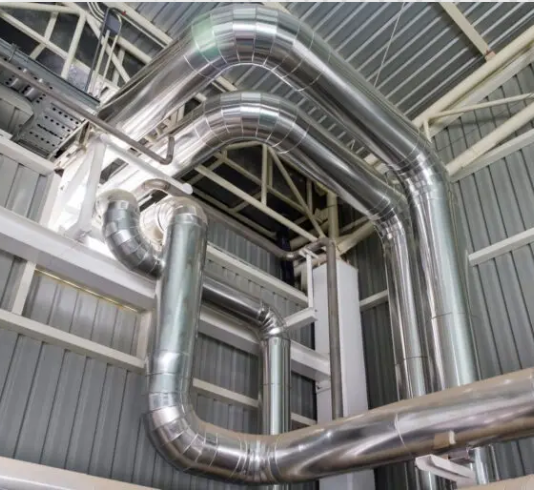
Aluminum Foil for Heat Exchangers (Fin Stock)
Mainly used for fins in evaporators and condensers.
Surface treatments: plain foil, hydrophilic coated foil (blue/gold), hydrophobic coated foil (white/black), anti-mold/antibacterial coating, etc.
| Alloy Series | Typical Temper | Thickness Range (mm) | Characteristics and Applications |
| 1100 | O, H22, H24, H26 | 0.08–0.20 | Pure aluminum, excellent thermal conductivity, commonly used as base material for hydrophilic foil |
| 8011 | O, H22, H24, H26 | 0.08–0.20 | Slightly higher strength, most widely used base material for hydrophilic and hydrophobic coatings |
| 1030B | H22 | 0.10–0.15 | Frequently used in high-end Japanese systems |
| 3003 | H14, H24 | 0.08–0.12 | Better corrosion resistance, used in mid-to-high-end units |
| 4343+3xxx+4343 Clad Foil | H14 | 0.08–0.15 | Brazing clad foil, used in micro-channel and parallel-flow condensers |
Tubing (Heat Transfer Tubes and Connection Tubes)
Brazing Clad Aluminum Materials (Nocolok brazing, mainly for automotive heat exchangers and some residential parallel-flow condensers)
- Clad sheet: 4045/3003, 4343/3003/4343
- Clad strip: used for bending into headers
- Micro-channel tube + clad fin + clad header → fully brazed assembly
Type | Common Specifications | Alloy/Temper | Applications |
Smooth tubeoothSmooth tube | Φ5, Φ7, Φ7.94, Φ9.52 mm etc. | 1050, 1070, 1100, 3003 / O, H14 | Copper tube replacement, used for rifled tubes |
Internally rifled tube | Φ5 mm, Φ7 mm (50–70 teeth) | 3003, 3102 / H12 | Mainstream choice for residential AC evaporators and condensers |
Pancake coil | 3.0–25.4 mm | 1070 / O | Connection tubes, insulated lines |
Micro-channel parallel flow tube (MPE) | 16×1.8 mm, 20×2.0 mm, 25.4×2.4 mm etc. | 1100, 3003 / H112 | Automotive parallel-flow condensers, residential micro-channel heat exchangers |
- Pure aluminum pots
Very common in the past, now relatively rare. They offer the best heat conduction but low hardness, easy deformation, and the surface tends to blacken. - Hard-anodized aluminum (hard anodized)
The surface undergoes anodizing treatment to form a hard aluminum oxide layer, greatly increasing hardness, wear resistance, and corrosion resistance. Usually dark gray or champagne in color (e.g., Supor hard-anodized pots in China, Anolon and Circulon abroad). - Aluminum alloy + surface coating (mainstream non-stick pans) Aluminum alloy base with PTFE (Teflon) or ceramic coating sprayed on the surface—the most common form of non-stick pans today (e.g., Supor, Zwilling, GreenPan, T-fal, etc.).
- Composite-bottom / multi-layer clad aluminum pots
A layer of stainless steel or steel is clad to the bottom to make the pan compatible with induction hobs (e.g., steel-aluminum-steel three-layer composite bottom). - Die-cast aluminum pots
Formed by die-casting process, allowing wall thickness of 4–6 mm or more for better heat retention. Common in high-end non-stick lines (e.g., Chinese brands Chudakou, Eisin, ASD’s premium series).